
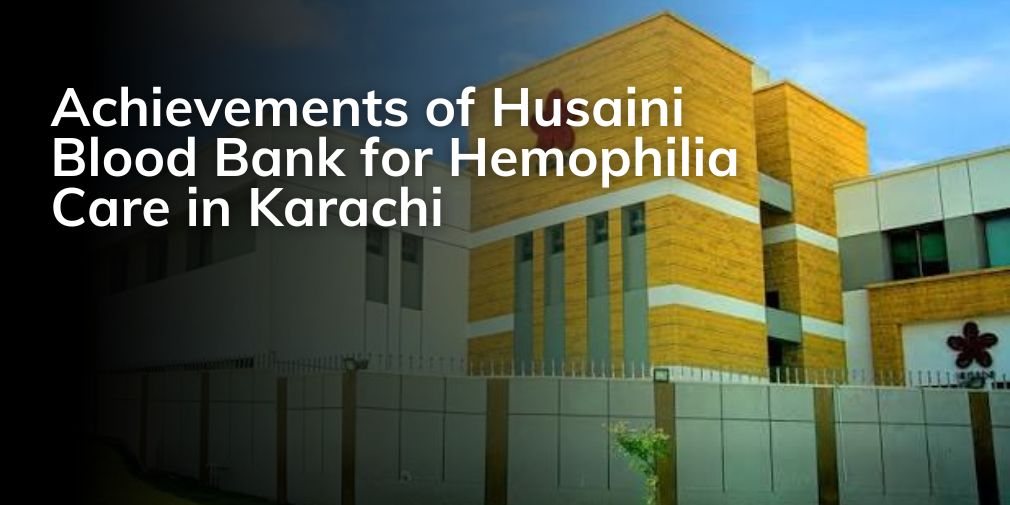
Achievements of Husaini Blood Bank for Hemophilia Care in Karachi
Husaini Blood Bank has run a dedicated Hemophilia Center since its Transfusion Services division was established, providing free plasma and clotting factor transfusions to registered patients under continuous doctor supervision. This model of hemophilia care Karachi families rely on covers diagnosis, treatment planning, and long-term monitoring at no cost to the patient. It stands out in a country where most people with bleeding disorders never reach a treatment center at all.
The Gap Husaini Was Built to Close
Hemophilia is a hereditary clotting disorder, and in Pakistan its true scale is only partially understood. The Hemophilia Foundation Pakistan estimates that around 25,000 people in the country live with bleeding disorders, yet fewer than 10% are registered with any treatment facility. That leaves roughly nine in ten patients undiagnosed or untreated, often relying on cryoprecipitate or fresh frozen plasma instead of proper clotting factor therapy.
Cost is the primary barrier. Factor concentrate is priced per international unit, and a single patient’s annual prophylaxis can run into the millions of rupees depending on body weight and severity. Without institutional support, sustained hemophilia treatment Karachi households can afford on their own is rarely realistic.
What Husaini’s Hemophilia Center Actually Delivers
Husaini Haematology and Oncology Trust was founded in 1979 to provide safe blood to Karachi’s communities, and its Transfusion Services division has since grown into one of the city’s few structured programs for hemophilia and thalassemia patients together, supporting more than 1,150 registered individuals with blood disorders at no charge.
For hemophilia specifically, the program supplies plasma and factor concentrate transfusions on an ongoing basis, backed by:
- A panel of doctors who design and revise each patient’s treatment plan
- Trained nurses and technicians who administer transfusions
- Diagnostic laboratory support to confirm factor levels and guide dosing
- Continuous monitoring so treatment adjusts as the patient’s condition changes
This structure is what separates a hemophilia specialist Karachi patient can return to repeatedly from a one-time transfusion at a general hospital. Consistency in dosing and monitoring is what prevents the joint damage and chronic complications that come from irregular, reactive treatment.
Why Factor Concentrate Access Is the Real Achievement
The clearest comparison is between reactive and planned care. Reactive care means a patient goes to a hospital only after a bleed has already started, often receiving fresh frozen plasma or cryoprecipitate because factor concentrate is unavailable or unaffordable. Planned care, the model Husaini follows, means registered patients have standing access to factor concentrate and a treatment plan built around their specific factor deficiency, so bleeds are managed faster and less joint damage accumulates over time.
Nationally, only a small fraction of hemophilia patients in Pakistan have consistent access to factor VIII or IX replacement therapy, according to data published in the Pakistan Armed Forces Medical Journal. Husaini’s free-of-cost model directly targets that gap for the patients it registers, which is the single biggest reason its hemophilia care Karachi program is worth documenting as an achievement rather than just a service listing.
Living With Hemophilia in Karachi: What Husaini Has Changed
Husaini describes its transfusion patients as pursuing full careers and stable lives rather than being defined by their condition. One patient, sharing his experience through Husaini’s platform, described the isolation of growing up hemophilic in Karachi without institutional support and how structured awareness efforts around his condition changed how schools and peers responded to him.
That account reflects a broader pattern: living with hemophilia is manageable when patients have reliable access to treatment and a support system that understands the condition, and difficult when they do not.
The Specialist Layer Behind the Numbers
Free transfusions alone do not explain patient outcomes. What matters is the hemophilia specialist consultation behind each treatment plan, since factor dosing depends on precise lab assays and periodic reassessment as a child grows or a patient’s activity level changes. Husaini pairs its diagnostic laboratory services with the Transfusion Services division specifically so factor level testing and treatment stay under one roof rather than requiring patients to coordinate between separate facilities.
The organization also runs an Institute of Haematology offering diploma training in blood banking and laboratory sciences, which feeds trained technicians back into its own transfusion program, a detail that matters for patients who need dosing that stays consistent over years, not just a single visit.
Supporting the Program
Husaini’s hemophilia and thalassemia services are funded through donations rather than patient fees, which is why donating blood or funds and following patient success stories both connect directly to whether the program can keep expanding its patient roster. For patients or families in Karachi trying to confirm eligibility, the Hemophilia Foundation Pakistan’s national helpline is a useful first point of contact alongside Husaini’s own intake process.
FAQ
Q1: Is Husaini Blood Bank's hemophilia treatment free for patients in Karachi?
A: Yes. Registered patients receive plasma and factor concentrate transfusions at no cost, along with doctor supervision and lab monitoring. The program is funded through donations rather than patient fees, which is standard for Husaini’s Transfusion Services division.
Q2: How does someone register for hemophilia care at Husaini?
A: Patients typically need a confirmed diagnosis with factor level testing, which Husaini’s own diagnostic lab can provide. From there, a doctor on the Transfusion Services panel builds an individual treatment plan for ongoing hemophilia treatment Karachi access.
Q3: What makes factor concentrate better than fresh frozen plasma for hemophilia?
A: Factor concentrate delivers a concentrated, measured dose of the specific clotting factor a patient lacks, allowing faster bleed control and more predictable dosing than fresh frozen plasma or cryoprecipitate, which contain lower and less consistent factor levels.