
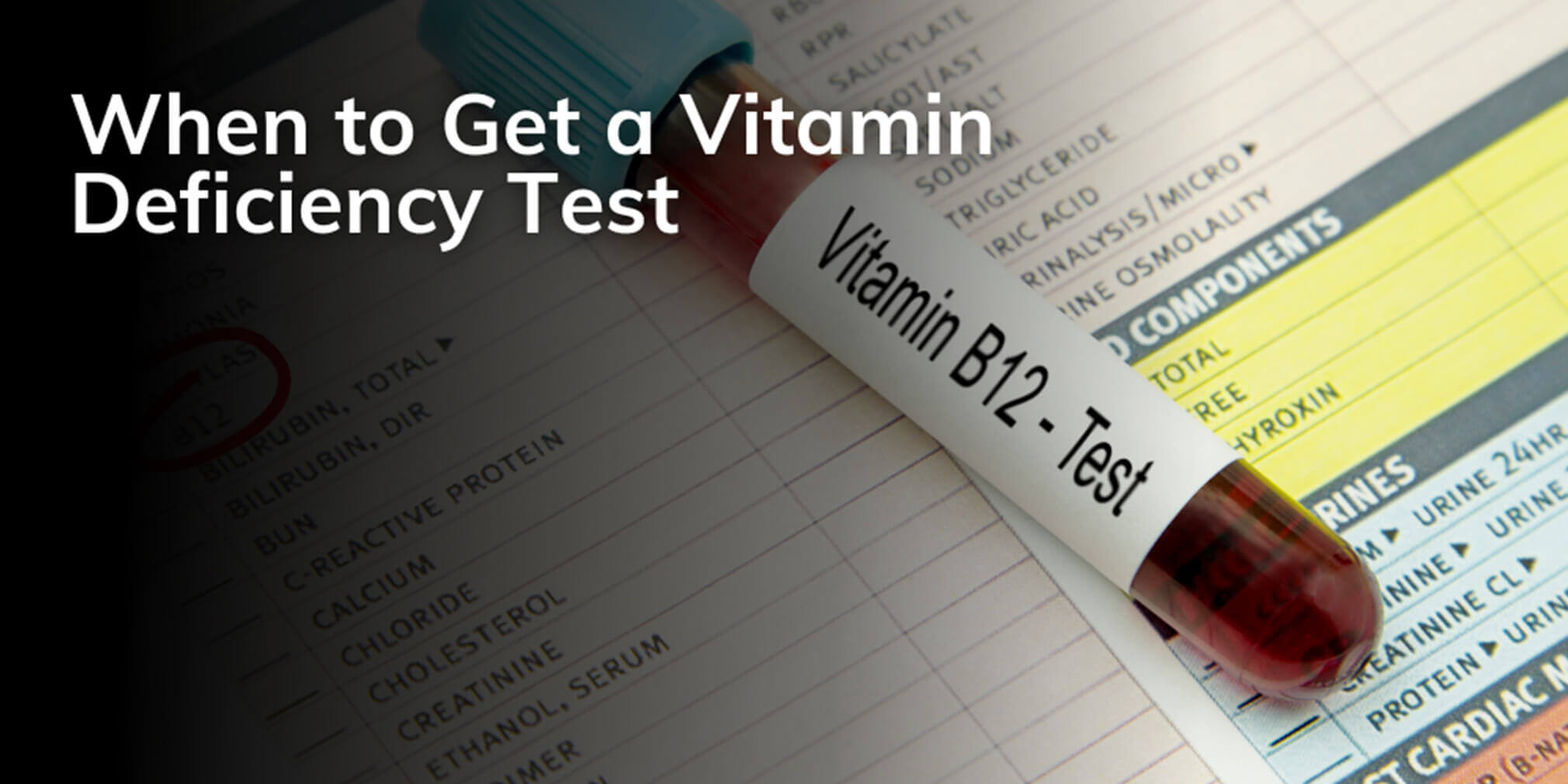
When to Get a Vitamin Deficiency Test
The following issues are often dismissed as symptoms of a busy lifestyle:
- Low energy levels
- A foggy memory
- The feeling of being stressed beyond usual
They are often overlooked. The general belief is that a little rest can help alleviate them. However, they might be the body’s way of telling if something serious is happening.
Vitamin deficiencies are surprisingly common. They can also be the root cause of numerous health issues, ranging from subtle fatigue to more severe long-term health issues. The issue is that these symptoms can be vague and difficult to identify. They make it easy to overlook a nutritional imbalance.
It is wise to determine when a vitamin deficiency test becomes necessary. Taking the test is a proactive step towards understanding the body’s needs and addressing potential health problems before they escalate. It is a straightforward process that provides valuable insights by pinpointing the exact nutrients and vitamins an individual is lacking.
Understanding a Vitamin Deficiency Test
A vitamin deficiency test (nutrients test) assesses levels of minerals and vitamins in human blood. The test can collect required blood samples via the following methods:
- Through a finger prick
- Through a venipuncture (venous blood draw)
Conducting a finger-prick test is easy at home by using a lancet to prick a finger for drawing and collecting blood.
However, tests needing venipuncture should be conducted under medical supervision. In the latter, a nurse or a medical professional collects blood from the vein through a syringe. The sample goes to the lab for analysis.
The vitamin and mineral deficiency test provides information about levels of micronutrients in the blood. If people have a deficiency of a particular vitamin or mineral, they might need a supplement to replenish it. Critical cases require medical tests and treatments for replenishment.
Both vitamins and micronutrients are vital for human health as they work in most processes of the human body.
The production of enzymes and hormones involve both vitamins and micronutrients. They are also necessary for the physical and mental development of both children and adults.
Importance of Healthy Vitamin and Mineral Levels for Human Health
Healthy vitamin and mineral levels are essential for all bodily functions. A lack of these nutrients can compromise a person’s health. These nutrients may be small, but they are pretty essential. The human body requires approximately 30 essential vitamins and minerals that it cannot produce internally. They are crucial in the following aspects:
- Keeping the brain sharp with clear thoughts
- Making energy in the cells
- Build and maintain strong bones and teeth
- Protection against diseases
- Help the body heal wounds
A significant drop in vitamin and mineral levels indicates serious health issues. For instance, low iron levels cause anemia, while too little vitamin D causes rickets in children (softening their bones) and thus weakening their bones as they grow up.
Nearly two billion people worldwide lack access to sufficient micronutrients. Pregnant women and young children are at a greater risk in this regard.
What are the Symptoms of Vitamin Deficiencies?
Vitamin deficiencies often appear as subtle symptoms. They are usually mistaken for minor health issues. Let us now briefly examine these symptoms to see whether or not a vitamin deficiency test must be taken:
- Persistent fatigue: An individual feeling constantly tired despite getting enough sleep is due to lower levels of either vitamin B12, vitamin D, or iron
- Brittle nails and hair loss: Excessive hair shedding or brittle nails indicate a deficiency in either biotin (vitamin B7) or zinc.
- Frequently falling ill: Individuals falling sick quite often indicate low levels of vitamin C or D in them. They both are essential for a robust immune system.
- Problems with the skin: Dry, flaky skin or frequent rashes signal deficiencies of vitamins A, E, or essential fatty acids
- Problems with vision: Issues with seeing at night or dry eyes are classic signs of vitamin A deficiency
- Mood changes suddenly: Symptoms of anxiety and depression are linked with deficiencies of B-complex vitamins or vitamin D
- Numbness or tingling: Low levels of vitamin B12 can affect nerve function that leading to numbness or sensations of tingling in the extremities.
A proper vitamin deficiency test can identify a lack of nutrients before they can harm human health. Most people obtain enough nutrients by consuming a variety of fruits, vegetables, whole grains, and lean proteins. However, those having autoimmune conditions like Crohn’s disease or those following strict diets need extra testing and assistance to stay healthy.
Blood Test for Vitamins and Minerals Deficiencies
Numerous blood tests can help determine the accurate levels of various vitamins in the human body. Each test depends on assessing the deficiency of a certain vitamin or mineral. Here are some of the most common and reliable tests in this regard:
25-Hydroxy Vitamin D Test
This vitamin test name may sound complex. Yet, the test is an accurate way to measure the level of 25-hydroxyvitamin D (25(OH)D test). It is the primary storage form of vitamin D in the human body. Either nanograms per milliliter (ng/mL) or nanomoles per liter (nmol/L) are used in measuring the test results. Here are the ranges of this rest:
- Optimal levels are generally between 30-50 ng/mL (75-125 nmol/L). However, these levels can vary depending on the individual’s needs and health conditions. Some experts recommend higher levels (50-80 ng/mL) for improved health.
- Low levels are below 20 ng/mL, and they indicate a deficiency.
Serum Vitamin B12 Test
This vitamin test name sounds easy, and it measures the total amount of vitamin B12 in the human blood. It is a standard test. But it is not usually the most accurate indicator of vitamin B12 levels, even for borderline cases. Here are its ranges:
- Normal ranges are usually 200-900 picograms per milliliter (pg/mL). But some labs use slightly varying ranges.
- Low levels are below 200 pg/mL, and that indicates a problem.
Methylmalonic Acid (MMA) Test
The MMA test is used with the serum vitamin B12 test together. When B12 levels are borderline then it is needed. MMA acid is a substance that builds up in the blood when vitamin B12 levels are low. Hence, a high level of MMA is a more sensitive indicator of vitamin B12 deficiency than a low level of MMA alone. Here are some of its ranges:
- High MMA levels indicate a higher likelihood of vitamin B12 deficiency.
Homocysteine Test
Homocysteine is an amino acid. Its elevated levels indicate deficiencies of both vitamin B12 and folate. It can be a helpful additional marker when combined with MMA and serum B12 tests. Yet it is not specific to B12. Further testing to determine causes of high homocysteine levels are needed.
Red Blood Cell (RBC) Folate Test
This test measures the amount of folate stored within red blood cells. Comparatively it is known to be a more accurate long term indication of folate status. There is no need to compare it to serum folate levels. They fluctuate more with the recent dietary intake. Here are the test’s ranges:
- Typical ranges vary according to the lab’s results.
- Generally, higher levels indicate better folate levels.
Serum Folate Test
This test determines the amount of folate in the liquid portion of blood (serum). It is helpful but can be quite susceptible to short-term dietary changes compared to the previous test.
Serum Vitamin C Test
This test measures the level of vitamin C (ascorbic acid) in human blood. Here are its ranges:
- Levels above 0.6 mg/dL are considered right. But normal ranges vary.
- Low ranges, especially below 0.2 mg/dL, indicate a deficiency.
The Serum Retinol Test
The serum retinol test measures vitamin A levels (retinol) in the blood. However, the levels of this serum may not accurately levels of vitamin A unless and until there is a severe deficiency. The liver maintains retinol levels until reserves are depleted. Here are its ranges:
- Levels above 20 mcg/dL are considered adequate. But typical ranges differ.
- Levels less than 10mcg/dL are low and indicate severe deficiency.
The Serum Alpha-Tocopherol Test
This test measures vitamin E levels. Here are its ranges:
- Normal ranges are 5.5- 17 mg/L.
- Lower ranges are below 5.5 mg/L, and this indicates a deficiency.
Prothrombin Time (PT) Test
This test measures the rate at which blood clots. Here are its ranges:
- Normal ranges are between 11 to 13.5 seconds.
- Higher levels indicate that the blood may take time to clot.
Over to You
Understanding which vitamin deficiency test accurately detects the deficiency of particular vitamins is an essential step towards proactive health management. This helps people work with their healthcare providers to identify any deficiencies and take proactive steps to manage them effectively.
Interpreting the results of these tests requires a holistic approach. Individual factors are given due consideration. Giving regular checkups due priority can help address identified deficiencies. This also helps in making the necessary dietary changes and taking any medications under the guidance of qualified physicians and dietitians.