
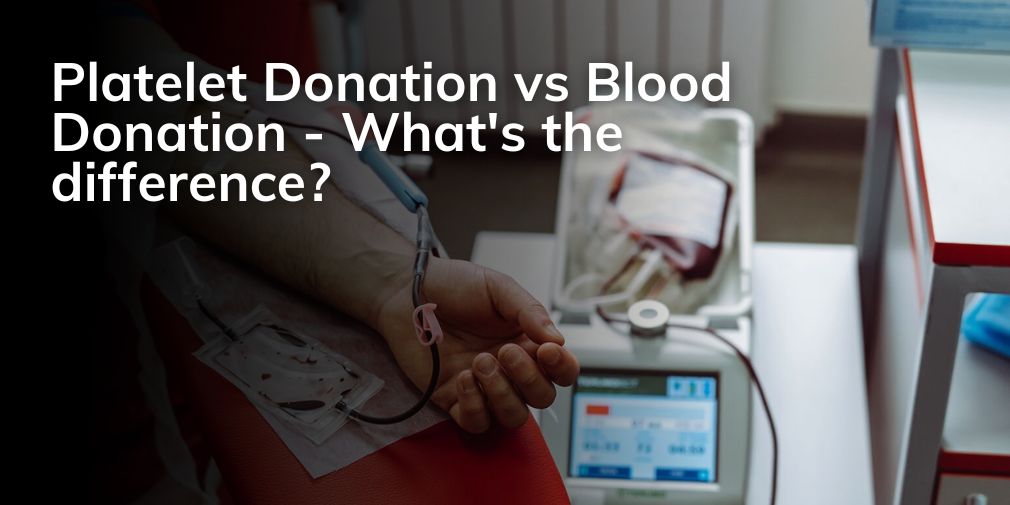
Platelet Donation vs Blood Donation – What’s the difference?
Platelet donation vs blood donation are not the same process, do not serve the same clinical purpose, and do not follow the same donor requirements. Most people assume donating is donating, but the type determines what a patient receives, how quickly it reaches them, and how often a donor can contribute. Here is exactly how the two differ.
What Happens During a Whole Blood Draw?
A single draw collects approximately 450 millilitres, which a laboratory then separates into its three components: RBCs, plasma, and platelets. The draw itself takes 10 to 15 minutes, with the full visit including registration and health screening taking around 45 minutes to an hour. Because one contribution yields multiple components, a single whole blood donor can potentially help more than one recipient depending on how the components are allocated.
What Happens During Platelet Collection?
Platelet donation uses a process called apheresis. A machine draws from the donor, separates and collects only the platelets, and returns the remaining components back to the donor’s body in the same session. The key difference from a whole blood draw is that separation happens in real time rather than in a laboratory afterward.
A single apheresis session yields a therapeutically complete dose directly, whereas producing the same from whole blood requires pooling from multiple donors. The process takes between 60 and 90 minutes, which is the most noticeable practical difference for a donor.
Donating Platelets vs Whole Blood: Key Differences
Collection Method
A whole blood draw uses a single needle and collects everything together. Platelet donation vs blood donation involves an apheresis machine that continuously cycles blood out, collects the platelets, and returns the rest to the donor throughout the session.
Time Commitment
A whole blood draw is significantly shorter at the collection stage. Platelet donors remain seated and connected to the apheresis machine for the full 60 to 90 minute session.
Frequency
This is one of the most practically important differences between the two:
- Whole blood: Minimum 12-week interval between draws, as RBCs take longer to replenish
- Platelets: Minimum 48-hour interval between sessions, with a recommended maximum of 24 apheresis donations per year under WHO guidelines
- The shorter interval for platelet collection is directly tied to how quickly the body replenishes them compared to RBCs.
Recovery
After a whole blood draw, RBC levels take several weeks to fully replenish. After platelet collection, counts typically return to normal within a few days, which is the biological basis for the considerably shorter interval between sessions.
Is Platelet Donation Safe?
This is the most common question from first-time apheresis donors, and the evidence-based answer is yes, when conducted by trained staff using sterile single-use equipment. The apheresis process uses a closed sterile circuit, meaning nothing in the collection cycle introduces contamination risk.
Donors may experience:
- Mild tingling during the session from the anticoagulant used to prevent clotting
- A cool sensation as blood cycles through the machine
- Brief fatigue afterward
These effects are temporary and minor. Serious adverse events are consistently documented as rare in published apheresis safety literature. A standard whole blood draw carries an equally well-established safety profile, with the most commonly reported effects being brief light-headedness or mild bruising at the needle site.
Why Platelet Donation Is Important?
Why platelet donation is important comes down to shelf life. Platelets survive only five to seven days after collection, compared to RBCs which can be stored for up to 42 days. This means platelet supply must be maintained through continuous, active contribution with no room for gaps that stored reserves can cover.
The concentrated yield from a single apheresis session also means one donor provides a complete therapeutic dose, whereas the equivalent from whole blood requires combining contributions from multiple donors, adding both processing time and logistical demand.
Who Can Donate?
General eligibility for both types requires donors to be in good general health, meet a minimum weight threshold, fall within the eligible age range set by the collecting facility, and pass a health screening on the day. Platelet donors are additionally assessed for adequate platelet count before the apheresis session begins.
Factors that may temporarily affect eligibility include:
- Recent illness or infection
- Certain medications
- Recent tattoos or piercings within a specified window
- Travel history to certain regions
A health screening at the time of the visit determines individual eligibility, and accurate disclosure of health history is essential for both donor safety and the integrity of the supply.
FAQ’S
Q: What is the main difference between platelet and whole blood donation?
A: The core difference is the collection method. A whole blood draw collects all components together through a single needle. Platelet collection uses an apheresis machine to extract only platelets while returning everything else to the donor during the same session.
Q: Is platelet donation safe for regular donors?
A: Yes. The procedure uses sterile single-use equipment in a closed circuit, and serious adverse events are documented as rare.
Q: Why does platelet collection take longer?
A: The longer duration is a direct result of the apheresis process, where blood cycles continuously through a machine to separate and collect platelets before returning the remaining components. This takes 60 to 90 minutes compared to the 10 to 15 minutes of a standard draw.