
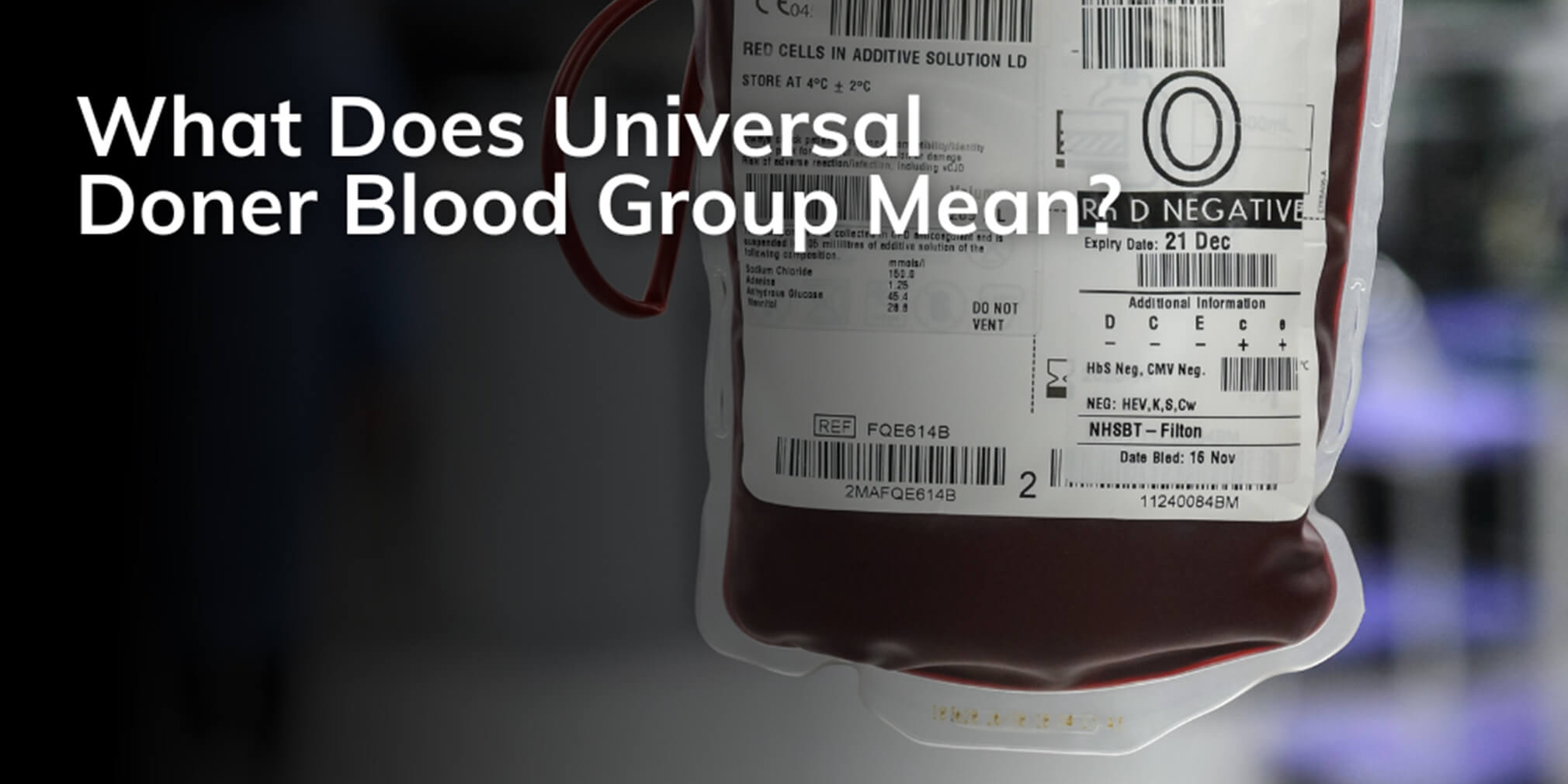
What Does Universal Doner Blood Group Mean?
The term universal donor blood group refers to a specific type that can safely donate to almost all other types. In transfusion medicine, this concept plays a critical role in emergencies where an immediate transfusion becomes essential. Healthcare providers rely on the universal group to prevent life threatening delays, especially when there is no time for extensive compatibility testing.
Understanding Blood Groups and Compatibility
Human blood falls into different categories based on the presence or absence of antigens on red blood cells (RBCs). The two most important systems include ABO and Rh factor. These systems determine compatibility between donor and recipient.
There are four main groups in the ABO system: A, B, AB, and O. Each group can be either Rh-positive or Rh-negative, creating eight possible types.
Group O negative holds the distinction of being the universal donor because it lacks A, B, and Rh antigens. This absence reduces the risk of an immune reaction during transfusion.
Why O Negative Is Called the Universal Donor?
The universal donor blood group refers specifically to O negative type. This type does not trigger most immune responses because recipient antibodies do not recognize foreign antigens. When doctors administer O negative blood, they minimize the chances of transfusion reactions.
Emergency departments and trauma centers keep O negative readily available. This ensures rapid intervention in critical situations such as severe accidents, surgical emergencies, and childbirth complications.
Despite its importance, O negative remains relatively rare compared to other types, increasing its demand and highlighting the need for regular voluntary donations.
Can O Positive Donate to Anyone?
A common misconception is whether O positive can donate to anyone. O positive can donate to all positive blood types, including A positive, B positive, AB positive, and O positive. However, it cannot safely donate to Rh-negative recipients.
This limitation exists because O positive contains the Rh antigen. If Rh-negative individuals receive this blood, their immune system may react and produce antibodies, causing complications in future transfusions.
Therefore, while O positive is widely compatible, it is not considered the universal donor group.
Role of Cross Match Blood Test in Transfusions
Even though the universal blood group provides flexibility, doctors still perform compatibility testing before most transfusions. The cross match blood test checks how donor red blood cells react with the recipient’s serum.
This test detects potential incompatibilities that standard grouping may miss. It ensures the safest possible transfusion by preventing adverse immune reactions. Hospitals consider cross matching a critical step in planned transfusions, especially for patients requiring repeated transfusions.
Importance of Universal Type in Emergencies
The universal donor blood group plays a vital role in emergency medicine. Doctors often treat patients before determining their exact blood type. In such cases, O negative blood becomes the safest immediate option.
Situations that require rapid transfusion include: Severe trauma, Major surgeries, Internal bleeding, Obstetric emergencies. Quick access to compatible blood significantly improves survival rates. Healthcare systems prioritize maintaining adequate reserves of O negative blood.
Distribution and Common Blood Group Trends
Blood group distribution in Pakistan shows a clear dominance of O positive, followed by B positive and A positive. The common blood group across major cities and rural populations remains O positive, which supports most routine transfusion needs.
In contrast, O negative represents a very small percentage of donors, yet it carries critical importance in emergency care. Hospitals often face shortages of O negative and other Rh-negative types due to limited donor availability.
Understanding these distribution patterns helps blood banks plan donation drives and maintain balanced supplies.
Safety and Limitations of Universal Donation
Although the universal donor blood group offers broad compatibility, it does not eliminate all risks. Doctors must consider other factors such as minor antigens, patient history, and previous transfusion reactions.
Repeated transfusions can increase the likelihood of antibody development, making future compatibility more complex.
Additionally, plasma compatibility differs from RBC compatibility. While O negative is the universal donor for red blood cells, AB plasma is considered the universal plasma donor.
Ethical and Clinical Considerations
Medical professionals follow strict protocols when using the universal donor group. It is reserved primarily for emergencies where no alternative exists.
Encouraging voluntary donation remains essential to maintain adequate blood supplies. Public awareness and regular donation drives help ensure a stable and safe supply.
Conclusion
The universal donor blood group holds a central place in modern healthcare. It ensures rapid and safe transfusions during critical situations where time and compatibility determine survival. Being compatible with most blood types, it is highly important for voluntary donation programs to maintain a steady hospital supply.
FAQs
Q: What makes the universal donor blood group special?
A: The universal type lacks A, B, and Rh antigens. This feature allows it to remain compatible with most recipients and reduces the risk of transfusion reactions.
Q: Is O positive also a universal group?
A: O positive can donate to many people but not all. It cannot replace the universal group because it contains the Rh antigen.
Q: Why is O negative blood always in demand?
A: O(-) type serves as the universal type and supports emergency transfusions. Its limited availability increases demand in hospitals.
Q: What is the most common blood group?
A: The common group in many populations is O positive, followed by B positive and A positive.